How to Improve Your Website’s Google Ranking (Without Losing Your Mind)
Want higher Google rankings? Discover 9 proven strategies to boost your website’s visibility, traffic, and SEO success—without the overwhelm.

Let’s be real for a second.
There’s nothing more frustrating than pouring your heart and soul into a website—designing, writing, optimizing—and then… crickets. No clicks. No traffic. No love from Google.
I’ve been there.
Years ago, I launched a blog I was sure would blow up. I followed all the “expert advice.” Keywords? Check. Meta tags? Check. A nice theme? Check. But my content sat on page 10 of Google like an invisible ghost town.
It wasn’t until I stopped chasing hacks and started building real SEO foundations that things turned around. I’m talking about strategies that not only improved my Google ranking but also attracted the right audience—people who stayed, engaged, shared, and even converted.
And now, I want to show you how to do the same.
Let’s dive in.
1. Start with the One Thing Most People Ignore: Search Intent
Here’s the hard truth: Google doesn’t care how “optimized” your content is if it’s not answering what the user is really searching for.
Search intent is the why behind a query.
Are they looking to buy? To learn? To compare options?
Example:
If someone types “best noise-canceling headphones,” they’re probably not looking for a blog post titled “What Are Noise-Canceling Headphones?”
They want a list. With comparisons. Pros and cons. Maybe affiliate links.
So before you write another word, pause. Ask yourself:
“If I were the user searching this, what exactly would I want to find?”
Nail that, and you’re already ahead of 80% of websites.
2. Craft Killer Content—But Not Just Any Content
Google has said it a thousand times: Content is king.
But here’s the missing piece no one talks about…
The king only rules if the people love him.
High-ranking content doesn’t just inform—it connects. It hooks people in and keeps them there.
Write like a human. Talk to the reader. Tell a story. Add punchy one-liners. Make it so good people want to read it to the end.
And don’t be afraid to go deep.
Cover the topic better than anyone else. Add stats. Add visuals. Add real examples.
In fact, that’s one reason this very blog ranks—because I don’t hold back. I give value.
Want more time on page? Make your content worth staying for.
3. Don’t Just Use Keywords—Use Them Intentionally
Yes, keywords still matter. But stuffing your article with “how to improve your Google ranking” twenty-five times won’t help.
Here’s what does help:
- Use your primary keyword in the title, first 100 words, one subheading, and conclusion.
- Add LSI keywords (related terms) naturally. Tools like Surfer SEO or SEMrush can help.
- Make sure your keyword is in your meta description and URL.
And for the love of rankings, write for humans first.
Google’s smarter than ever. It knows when your content flows naturally… and when it’s forced and robotic.
4. Optimize Your On-Page SEO Like a Pro
Here’s a quick checklist I personally use for every blog post:
- ✅ Clear and concise title with the main keyword
- ✅ Compelling meta description (under 160 characters, keyword included)
- ✅ Proper use of H1, H2, H3 headers
- ✅ Internal links to relevant posts
- ✅ External links to authoritative sources
- ✅ Image alt text with keywords
- ✅ Short, punchy paragraphs (no more than 3 lines each)
Simple, right? But most people skip this stuff—and it costs them rankings.
5. Make Your Website Fast. Like, Really Fast.
Would you wait 10 seconds for a page to load?
Neither would I. Neither would Google.
In fact, site speed is a ranking factor. A slow site not only tanks your SEO—it kills your user experience.
According to Google, if a page takes more than 3 seconds to load, over 50% of users bounce.
Tools like PageSpeed Insights or GTmetrix can show you what’s slowing you down.
Here’s what helped me the most:
- Compress images (use WebP format)
- Use a CDN (like Cloudflare)
- Enable browser caching
- Avoid bloated themes and unnecessary plugins
6. Earn Backlinks Without Being Spammy
Backlinks are still one of the strongest signals to Google that your content is trustworthy.
But cold-emailing 100 bloggers asking for links? That’s not it.
Instead:
- Write link-worthy content (think ultimate guides, statistics, and case studies)
- Be active in your niche community (Reddit, Quora, Facebook groups)
- Guest post on quality sites
- Build relationships with other creators
When I published an in-depth SEO guide, I didn’t beg for backlinks. I shared it in the right places—and the backlinks came naturally.
Be so helpful, people can’t help but link to you.
7. Use Google Search Console Like Your Life Depends on It
This tool is your SEO crystal ball. And it’s free.
With Google Search Console, you can:
- See which keywords you’re ranking for
- Find low-hanging fruit (keywords ranking #8–#20)
- Spot crawl errors
- Submit new content for indexing
- Monitor backlinks
I log into GSC every week. It helps me spot trends, update old content, and double down on what’s working.
8. Update Old Content (Because Google Loves Freshness)
One of the easiest wins in SEO is updating content that’s already ranking.
Go back to older posts. Improve headlines. Add fresh stats. Update screenshots. Make it longer. Link to newer posts.
I once took a blog stuck on page 3, added 300 words and fixed broken links—and it jumped to position #4 in two weeks.
You don’t always need more content. You need better content.
9. Be Patient, But Stay Hungry
SEO is a marathon—not a sprint.
You won’t go from page 10 to page 1 overnight. But if you plant the right seeds and keep nurturing your site?
You’ll reap the results.
I’ve seen this play out time and time again—for myself and for the clients I’ve worked with.
Just don’t give up too soon. Most people do—and that’s why they never win.
Final Thoughts: Google Doesn’t Reward Good Intentions—It Rewards Good Execution
If you want to improve your Google ranking, it’s not about gaming the system.
It’s about serving people better than anyone else.
Give real value. Show up consistently. Follow proven strategies. And always—always—put the user first.
That’s how you win.
And hey, if this post helped you even a little, do me a favor:
👉 Share it with someone trying to grow their site.
👉 Or better yet, drop a comment and tell me where you’re stuck. I read every one.
Let’s grow together.
FREE SEO GUIDE
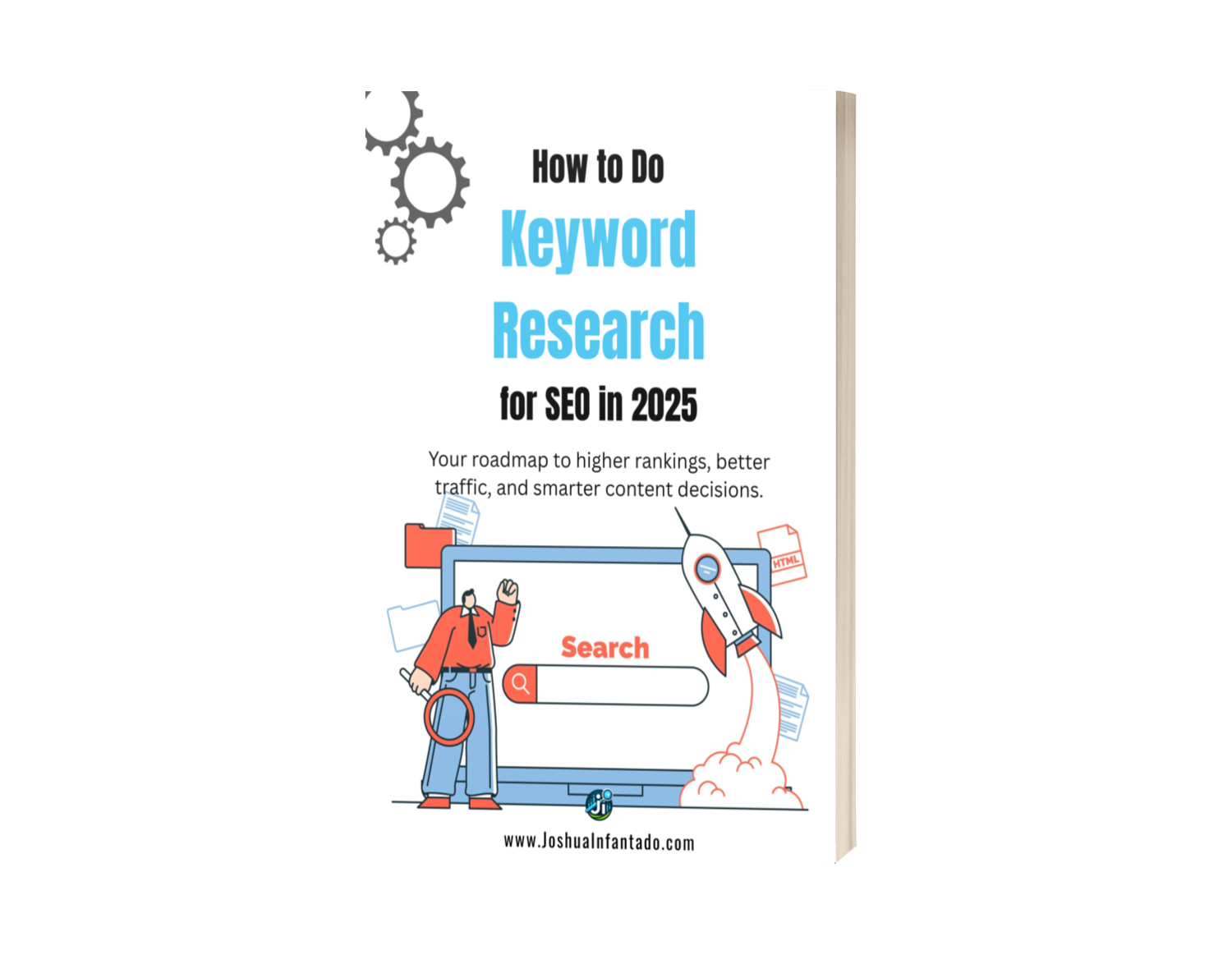
🚨 Want to rank higher on Google in 2025? Stop guessing and start ranking.
I’ve put together a FREE downloadable guide that reveals exactly how to do keyword research for SEO in 2025—the smart, strategic way.
✅ No fluff
✅ No outdated tactics
✅ Just real, actionable strategies that work right now
If you’re tired of pouring your heart into content that no one sees… this is your roadmap.
📥 Download it now by providing your best email below and start turning keywords into clicks, and clicks into customers.
Your future rankings will thank you.
 Internet Marketing Solution