How to Do Keyword Research for SEO in 2025
Your roadmap to higher rankings, better traffic, and smarter content decisions.
Let’s face it—SEO isn’t what it used to be.
Gone are the days when stuffing a blog post with the same keyword over and over could land you on page one of Google.
This is 2025.
The algorithm is smarter. The competition is fiercer. And attention spans? Shorter than ever.
But here’s the good news:
If you can master keyword research today, you’re not just playing the game—you’re setting the rules.
And I’m here to show you how.

Why Keyword Research Still Matters (Now More Than Ever)
Some “experts” will tell you keyword research is dead.
They’re wrong.
Here’s the truth: Google is still a search engine.
People still type (or speak) their questions, needs, and problems into it. And what you need to do is show up with answers—using the language your audience uses.
That’s keyword research. Simple in theory. Game-changing when done right.
The Evolution of Keyword Research in 2025
We’re not just looking at monthly search volume anymore. That’s old school.
In 2025, effective keyword research is about:
- Search intent – What are people really looking for?
- Topical authority – Are you covering the full conversation around a topic?
- Semantic relevance – Are you speaking the language of your niche?
- Voice search and AI prompts – Are you optimized for how people ask, not just what they type?
You’re not just targeting a keyword. You’re stepping into your audience’s shoes.
And when you do that right, magic happens.
Step-by-Step: How to Do Keyword Research Like a Pro in 2025
Let me break it down for you like I would for a close friend.
1. Start With Problems, Not Phrases
Empathy-first SEO: where real connections begin.
Before you even type a word into a keyword tool, pause.
Forget about data for a second. Forget about search volume. Forget about competition scores.
Start by asking yourself one powerful question:
What is my audience struggling with right now?
Behind every Google search is a real human being—frustrated, curious, hopeful, or desperate for help.
They’re not thinking in keyword phrases. They’re thinking in pain, emotion, and questions.
You’re not looking for words.
You’re looking for wounds.
Picture this. You’re in the fitness niche.
Sure, “optimal protein intake” might sound impressive.
But your ideal reader? She’s a tired mom juggling work, kids, and late-night workouts that don’t seem to be paying off.
She’s not Googling technical jargon.
She’s typing:
- ”Why am I not losing weight even though I’m working out every day?”
- “Is something wrong with my metabolism?”
- “How do I stay motivated when I see no results?”
That’s where real keyword research begins.
Not with numbers, but with needs.
How to Find These Hidden Gems:
Go where your people are venting, not selling.
- Reddit – Subreddits like r/fitness, r/personalfinance, or r/parenting are full of raw, unfiltered questions.
- Quora – Search by topic and you’ll find gold in the “unanswered” or “most viewed” sections.
- Facebook Groups – Look for posts that start with “Anyone else struggling with…” or “How do you deal with…”
Don’t just skim—listen.
Read the comments. See what gets engagement. Pay attention to recurring themes.
The pain points you uncover?
Turn them into blog posts, videos, product pages—and yes, keywords.
Why This Approach Works in 2025:
Google’s algorithm has evolved to mimic human thinking.
It’s not just scanning for keywords—it’s interpreting meaning, context, and intent.
So when you create content that directly addresses a real question, using the same language your audience uses, guess what?
Google sees it.
Readers feel it.
And rankings follow.
Bottom line: Before you optimize, empathize.
You’re not just doing SEO.
You’re solving someone’s problem—maybe even changing their life.
That’s powerful.
That’s human.
That’s how you start keyword research in 2025.
2. Use Tools, But Don’t Be Ruled by Them
Let the tools serve your strategy—not shape your soul.
Let’s get one thing straight:
I love SEO tools.
They’re powerful, insightful, and—when used well—can save you months of trial and error.
But here’s the truth no one tells you:
Tools don’t think. You do.
They can show you what’s popular, but they can’t tell you why it matters.
They can give you thousands of keywords, but not which ones resonate.
They can track rankings, but not how your words change lives.
So yes—use tools. But never let them replace your judgment, intuition, or empathy.
Must-Have SEO Tools in 2025
Here’s a curated stack of game-changers I personally use (and recommend):
- Ahrefs – Still one of the best for discovering keyword gaps, spying on your competitors, and identifying backlink opportunities. It shows you where you’re losing and where you can win.
- Semrush – A powerhouse when it comes to keyword clustering, SERP intent analysis, and even content audits. It helps you align what you write with what people actually want.
- Google Search Console – It’s free, it’s powerful, and it shows you what people are already finding you for. This is your mirror. Use it often.
- AlsoAsked.com – This tool visualizes the “People Also Ask” questions in a branching format, giving you insight into how your topic connects to deeper concerns.
- ChatGPT with web browsing – Not just for content creation. Ask it: “What are trending long-tail searches in the travel niche this week?” You’ll be amazed.
But—and this is key—don’t lose yourself in the data.
You can have a spreadsheet with 1,000 keywords and still have zero clarity.
You can chase a “high-volume, low-competition” phrase that checks every SEO box…
…but if it doesn’t speak to a real human need, it’s dead on arrival.
So What Should You Do?
- Start with empathy.
Ask: “Does this keyword represent a real concern or goal my audience has?” - Cross-check with tools.
Use data to validate your ideas, not to generate them from thin air. - Look for patterns, not just numbers.
A phrase may have low volume but sky-high relevance. Don’t ignore it. - Avoid data paralysis.
You don’t need 500 keywords. You need 10 that actually matter. - Remember: Google is smart. People are smarter.
You’re writing for both—but never forget who clicks the link first.
Think of your tools like a compass, not a map.
They can show you direction—but the terrain, the landmarks, the heartbeats?
That’s on you.
You are the storyteller.
The strategist.
The one who turns insight into impact.
Use tools wisely. But never let them dull your creativity or hijack your message.
3. Understand Search Intent Like a Human
If you don’t know what your reader wants, your content doesn’t stand a chance.
You can have the perfect keyword. You can optimize the title, meta description, and headers. You can even sprinkle in semantically related terms like confetti.
But if you miss search intent—
You miss everything.
So what is search intent, really?
It’s the why behind the what.
It’s the reason someone goes to Google in the first place.
It’s the unspoken motivation behind the phrase they type into that little white box at the top of their screen.
It’s not about the words.
It’s about the need.
And if you can understand that need better than anyone else, you won’t just get clicks—
You’ll earn trust.
You’ll build authority.
And yes, you’ll rank.
The Four Types of Search Intent (And Why They Matter):
- Informational – “What is keto?”
They’re curious. They want to learn. No rush to buy, no decision being made yet—just exploring.
Your job? Educate clearly. Be helpful. Be their first step into the topic. - Navigational – “YouTube login”
They already know where they’re going. They’re using Google like a shortcut.
Your job? Don’t compete here—unless you are the brand or platform. - Transactional – “Buy protein powder online”
This is where the money is. They’re ready to pull the trigger.
Your job? Make it easy. Clear CTAs, product comparisons, trust-building signals. - Commercial Investigation – “Best running shoes 2025”
They’re shopping around. Comparing. Not quite ready to buy—but very close.
Your job? Guide them. Be unbiased. Be thorough. Help them choose confidently.
Here’s What Most SEO Writers Get Wrong
They see a keyword like “best standing desks” and think:
“Great! I’ll write a listicle.”
But wait—what kind of intent is that?
Informational? Commercial investigation?
Are they a first-time buyer? Are they comparing models? Are they on a budget?
Before you write a single word, ask yourself:
“Why would someone search for this? What’s the real goal behind the query?”
Because here’s the kicker:
If your content doesn’t match the reader’s intent, Google will bury it.
No matter how good it is.
No matter how well-optimized it looks on paper.
🎯 Pro Tip: Google Already Shows You the Intent
Want to know the search intent of any keyword?
Just Google it.
Look at the top 5–10 results.
Are they blog posts? Product pages? Tutorials? Reviews?
Google has already reverse-engineered the intent for you—based on real user behavior.
Match it. Don’t fight it.
Here’s the golden rule:
You’re not just writing content. You’re answering a question. Solving a problem. Fulfilling a purpose.
Every searcher has a story.
Your job is to meet them where they are, and gently guide them where they need to go.
Do that consistently—and your SEO won’t just bring traffic.
It will build trust.
And trust is what Google—and your audience—rewards.
4. Cluster Your Keywords for Authority
Want to rank higher? Then stop thinking in keywords—and start thinking in topics.
Here’s the truth nobody tells you loud enough:
Google doesn’t just want the “best article.” It wants the best teacher.
In 2025, authority isn’t built by a one-off blog post that nails a single keyword.
It’s built by creating an ecosystem of content around a central topic.
That’s what keyword clustering is all about.
Let’s break it down.
Say your main keyword is “intermittent fasting.”
You can write a killer guide—long, optimized, helpful—and still not rank.
Why?
Because Google doesn’t just evaluate your page.
It evaluates your entire site’s topical authority.
In other words, Google’s asking:
“Do you really know this topic? Or are you just here to grab clicks?”
What Is a Keyword Cluster?
A keyword cluster is a group of related search terms that fall under a broader topic.
Each piece supports the others. Together, they build a web of relevance and trust.
Think of it like this:
If your pillar content is “Intermittent Fasting: The Ultimate Beginner’s Guide,”
your cluster content might look like:
- What is intermittent fasting and how does it work?
- Benefits of intermittent fasting backed by science
- 16:8 vs. 5:2: Which intermittent fasting method is better?
- Is intermittent fasting safe for women?
- 7 common intermittent fasting mistakes (and how to fix them)
- Can you drink coffee during intermittent fasting?
Each article stands on its own.
But together? They scream authority.
And when Google sees this depth, this interconnectedness, it goes:
“Okay… this site knows what it’s talking about. Let’s rank them.”
🎯 Why Clustering Works
- It builds trust with Google.
You’re not a surface-level site—you go deep. You cover angles. You answer real questions. - It boosts internal linking.
When your content naturally connects, you create a network of pages that pass authority and keep people engaged longer. - It captures multiple intents.
Someone who starts with “What is intermittent fasting?” might later Google “IF for women” or “fasting mistakes.” If you’ve written those too—you stay in their world. - It reduces bounce rates.
Instead of leaving your site after one article, they stick around. They explore. They trust you more. That’s user behavior Google loves.
🔨 How to Build a Keyword Cluster (Without Losing Your Mind)
Here’s a simple process to get you started:
- Choose a Core Topic
Something broad, high-impact, and central to your niche. E.g., intermittent fasting or email marketing or budget travel. - Find Cluster Topics
Use tools like:
- Semrush Topic Research
- Ahrefs Content Explorer
- AlsoAsked.com
- Google’s “People Also Ask”
- Reddit and Quora threads
- Or just type your main keyword into Google and scroll. What are people asking? What’s showing up in the related searches?
- Map Out 5–10 Supporting Articles
Make sure each one serves a different sub-intent or question. Think: How can I help someone go from beginner to expert? - Link Them Together
Use contextual internal links. Don’t just toss them in—make the connections useful for the reader. - Publish Consistently
Authority doesn’t come from one viral post. It comes from consistency. One article at a time. Stack the value.
Bottom Line:
In 2025, content depth beats content length.
Don’t aim to just “rank for a keyword.”
Aim to own the topic.
Because when you cluster your content intentionally,
you don’t just show up on page one…
You dominate it.
5. Go Long (Tail) or Go Home
Let’s be real.
You’re not going to outrank WebMD, Healthline, or Harvard on a keyword like “weight loss.”
You’re just not. And that’s okay.
Because here’s the good news:
You don’t need to be the biggest to be the smartest. Or the most relatable. Or the most trusted in your niche.
In 2025, the gold isn’t in the crowded town square.
It’s in the winding alleyways where your people are looking for your answers.
Enter: Long-Tail Keywords
Long-tail keywords are those highly specific search phrases—usually 4+ words long—that reflect real questions, real problems, and real intentions.
They’re not generic like:
- “Weight loss”
- “Marketing”
- “Prayer”
They’re laser-focused like:
- “How to lose weight with intermittent fasting as a busy mom”
- “Email marketing strategies for handmade jewelry sellers”
- “How to pray when you feel spiritually dry”
See the difference?
One is a billboard.
The other is a personal conversation.
Why Long-Tail Keywords Matter More Than Ever in 2025
Search engines are smarter now. Google’s algorithm doesn’t just scan words—it understands intent and nuance like never before.
And what people are searching for isn’t broad, vague info.
It’s answers that feel personal. Solutions that feel like they were written just for them.
That’s what long-tail keywords allow you to do:
Speak to one person’s soul, not the whole internet’s noise.
What Long-Tail Keywords Bring to the Table:
✅ More Qualified Traffic
You’re not getting random browsers. You’re getting your people—those who actually care about your message, your product, your perspective.
✅ Lower Competition
While the big brands battle it out over head terms, you slip in quietly, ranking for keywords no one thought to target.
✅ Higher Conversions
Because when someone searches for “best protein powder for women over 40 with thyroid issues,” they’re ready.
They’re not just browsing. They’re buying, subscribing, committing.
Long-tail traffic doesn’t just visit. It converts.
Real-World Example
Let’s say you run a Christian blog.
You want to write about prayer. But “how to pray” is a battleground.
Instead, try:
- “How to pray when you feel far from God”
- “Daily prayer routine for busy Christian moms”
- “Prayers for when you’re overwhelmed with anxiety”
These long-tail keywords meet real people in real places. And those are the searches that change lives—and grow your blog.
✅ How to Find Long-Tail Keywords
- Use Google Autocomplete: Start typing your main topic and see what people are finishing it with.
- Check “People Also Ask” sections: They’re full of real questions.
- Explore Reddit, Quora, and niche forums: That’s where unfiltered questions live.
- Tools like AnswerThePublic, AlsoAsked, and even ChatGPT can help you brainstorm clusters.
- Don’t ignore Google Search Console: It shows actual long-tail keywords people already found you with!
6. Analyze the SERPs Like a Detective
Here’s a secret most beginner SEO writers overlook:
Google already tells you what it wants.
You just have to look closely—like a detective on a high-stakes case.
So before you write another word, search the keyword you’re targeting and study the SERP (Search Engine Results Page) like your rankings depend on it—because they do.
🕵️ What You’re Looking For
Let’s break it down like clues at a crime scene:
What Type of Content Dominates the Results?
- Are you seeing blog posts or videos?
- Is it a page of product listings or how-to guides?
- Maybe it’s full of forums like Reddit or Quora?
Why it matters:
If everyone on page one is doing videos, but you’re planning a blog post…you’re already out of sync.
Google is showing you what it believes answers the query best.
Match that format and go one better.
🔎 Who’s Ranking?
- Are you seeing high-authority domains like Forbes, HubSpot, or WebMD?
- Or are smaller blogs and niche sites ranking?
Why it matters:
If the SERP is dominated by giants, you’ll need a unique angle, long-tail keywords, or serious topical authority to compete.
But if you see indie blogs or newer domains, that’s your green light—Google is open to fresh voices. Game on.
What’s in Their Titles and Descriptions?
Look at how the top-ranking pages structure their:
- Titles
- Meta descriptions
- URL slugs
Are they using emotional hooks? Numbers? Questions? Keywords at the front? These aren’t just random choices. They’re tested, optimized, and often exactly what gets clicks.
Don’t copy them. Outshine them.
Write something so irresistible that your result becomes the new standard.
Real-Life Example:
Say your keyword is “how to build mental toughness.”
You search it, and here’s what you see:
- Top 3 results are list-style blog posts (“10 Ways to Build Mental Toughness…”)
- One high-ranking video titled “What Navy SEALs Teach About Mental Grit”
- All content is motivational, anecdotal, and practical
That tells you Google wants actionable, story-driven content with strong psychological pull.
So what do you do?
You write:
“Mental Toughness Isn’t Born—It’s Built: 7 Hard Truths That’ll Make You Unbreakable (Even When Life Sucks)”
That’s how you spy, analyze, adapt, and win.
Bonus Tip: Use These Tools to Analyze SERPs Like a Pro
- Ahrefs / Semrush – See keyword difficulty, backlinks, and what content ranks where.
- Keywords Everywhere – Add-on to show SERP data and trend graphs.
- Detailed SEO Extension – Chrome plugin to break down title tags, headers, schema, and more.
- Manual Search in Incognito – Best way to see unbiased SERPs.
Bottom Line
Don’t write blind.
SERP analysis isn’t cheating. It’s smart strategy.
You’re not guessing what works—you’re learning from what already works.
And once you know what Google wants?
Give it to them—better, deeper, and more human.
7. Refine and Evolve
If there’s one brutal mistake I see content creators make over and over again, it’s this:
They treat keyword research like a one-and-done checklist.
They find their keyword.
They write the post.
They hit publish.
And then… they move on.
But SEO doesn’t work that way in 2025.
Because Google?
It’s not a dusty library.
It’s a living, breathing organism that constantly learns and shifts.
And if your content doesn’t evolve with it, it dies in silence—buried on page 5 where no one ever looks.
Keyword Research Is Ongoing, Not a One-Time Event
Here’s the truth:
Your keyword strategy should never sit still.
After you publish, the real work begins.
You track. You tweak. You listen to the data.
Use the Tools That Talk Back
- Google Search Console – This is your reality check. It shows you:
- Which keywords are bringing clicks.
- What pages are ranking (sometimes for things you didn’t even target).
- Where your impressions are rising but clicks aren’t.
➡ That means opportunity. Maybe your headline needs more punch. Maybe the intro doesn’t hook. Maybe the page just needs a little more love.
- Google Analytics – Dive into:
- Time on page – Are people staying?
- Bounce rate – Are they bailing after one paragraph?
- Conversion paths – Is your content actually doing its job?
Then Take Action
- Update your blog posts with fresh stats, clearer explanations, or better examples.
- Add internal links to newer posts you’ve written—especially around your keyword clusters.
- Rewrite meta titles/descriptions to match new SERP trends or intent.
- Expand thin content into full-blown resource hubs that deserve to rank.
🌱 Think of SEO Like a Garden
You don’t plant a seed and walk away.
You water it. You trim the weeds.
You nurture it.
Content is the same.
It grows when you give it attention.
It fades when you don’t.
Want to stay on page one? You need to revisit your top content every few months.
Audit. Improve. Reinvent.
Because here’s the kicker:
Sometimes a tiny change can double your traffic.
Just a new H2. A better example. A stronger CTA.
✨ Real Talk: Winners Don’t Wait
While others are publishing blog after blog, chasing volume…
You’ll be refining. Elevating. Reinforcing your authority.
And that’s how you win in 2025—not just by producing more content…
…but by making every piece count more.
FREE SEO GUIDE
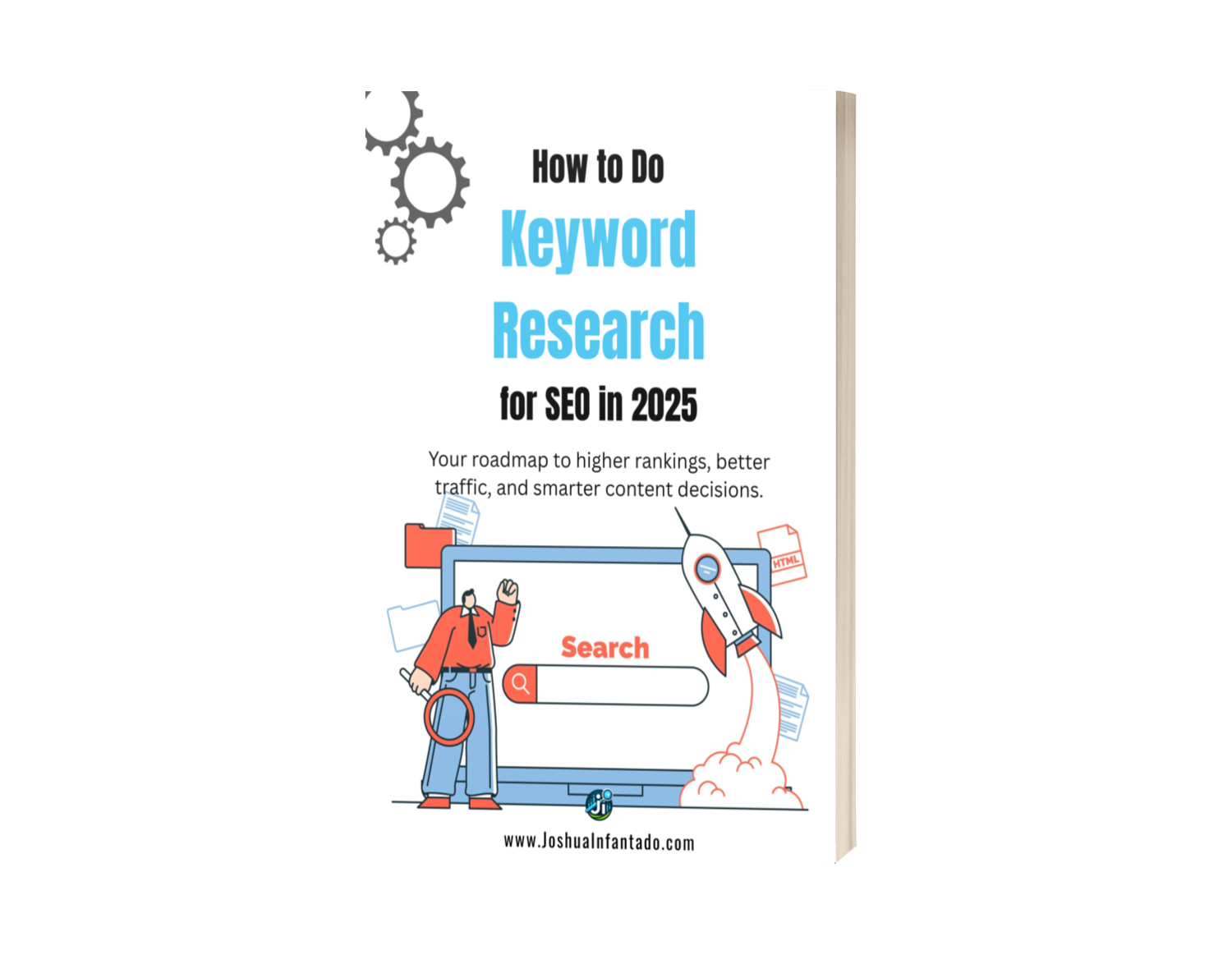
🚨 Want to rank higher on Google in 2025? Stop guessing and start ranking.
I’ve put together a FREE downloadable guide that reveals exactly how to do keyword research for SEO in 2025—the smart, strategic way.
✅ No fluff
✅ No outdated tactics
✅ Just real, actionable strategies that work right now
If you’re tired of pouring your heart into content that no one sees… this is your roadmap.
📥 Download it now by providing your best email below and start turning keywords into clicks, and clicks into customers.
Your future rankings will thank you.
Final Thoughts: Keyword Research Is About Connection
You’re not just trying to rank.
You’re trying to be found.
You’re trying to be relevant.
You’re trying to be remembered.
The best keyword research doesn’t just get you clicks.
It gets you conversations. Followers. Clients. Fans.
So go ahead—dive deep. Ask better questions.
And listen harder than your competitors ever will.
Because in the end, the ones who rise to the top of Google…
Are the ones who understand the people behind the search.
Action Steps: Let’s Put This Into Motion
- Write down 5 problems your audience faces
- Use a tool (or two) to turn those into keyword clusters
- Analyze the search intent behind each keyword
- Create content that meets the need, not just the query
- Track. Test. Tweak. Triumph.

About the Author
Joshua Infantado has been writing online since 2013 and has spent over a decade mastering the art and science of SEO. With a proven track record of helping hundreds of websites climb the Google rankings, he’s passionate about turning content into powerful, high-converting assets. Ready to boost your SEO? Let’s talk. Email Joshua at joshuainfantado@gmail.com or message him on WhatsApp at +63 976 247 6121.
 Internet Marketing Solution